SEO
General SEO
- The intent of the searcher is EVERYTHING
Figure out what they are trying to find and put that in front of them.
What does the person want? Information? Directions? Comparison? A list? To transact? Something completely unrelated? - Specificity is King – the more specific a search is, the better I can identify the intent – when in doubt, find more specific keywords
- Keyword search volume does not matter. Grade keywords on relevance, not volume
- Keyword difficulty is hardly relevant. Google expects keywords that are on similar sites to be on yours – for topical authority. If other sites are writing about a certain topic, they expect you too as well. Also, Keyword difficulty is a faulty 3rd party rating.
- Brand Power is the biggest SEO signal (can be local brand, offline, Google tracks various signals so knows).
So these are SEO tactics: billboards, press coverage (even without links), influencer campaigns (even without links), social media, word of mouth, direct mail, radio ads, tv ads
ANYTHING that increases brand awareness, brand recognition and brand dominance is an SEO tactic - For google, the pages it gives are the product. So these are also SEO tactics (making Google’s product better): Pro UX design, Pro UI design, Pro sales copywriting, product improvements, crafting a more enticing offer, contextually better images, captivating explainer videos, a great product guarantee. ANYTHING that increases brand engagement, time on page, sales, consumer relevance, remarkability etc. is an SEO tactic
- Establishing proper site architecture from the beginning is critical
- Don’t strive for rankings, strive for deep topical authority. Go deep, then wide. Width is what clients typically want. Depth is what Google wants.
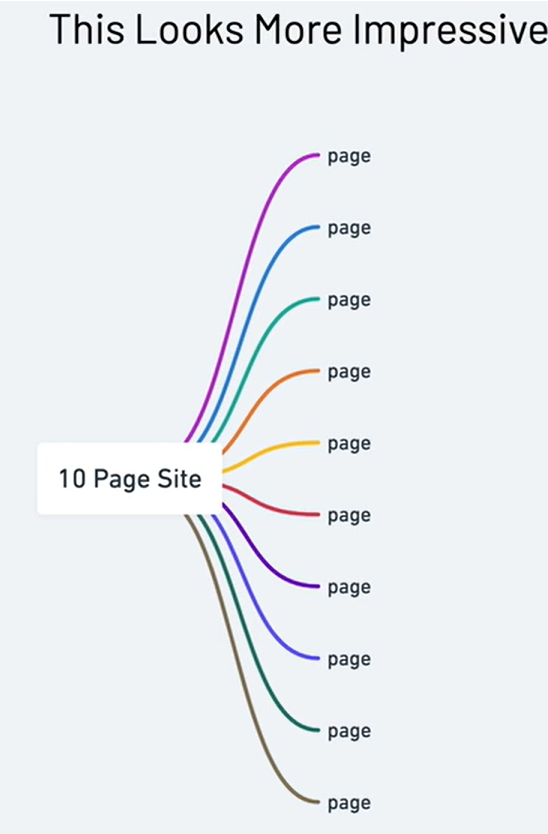
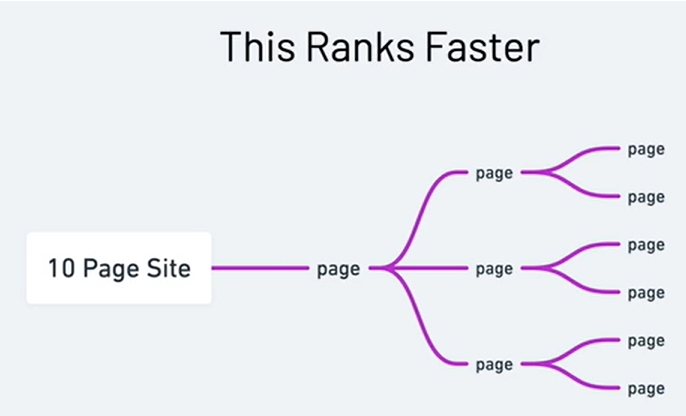
Focus on depth in all ways: include all relevant page sections, cover all relevant sub-topics, cover all relevant context, use more media, use more internal links, use more external links, go well beyond surface level with content
Traffic, backlings and number 1 rankings do not mean you are winning. Every ounce of your SEO effort should be dedicated to increasing revenue.
Keywords
- Start with a “head term”
Open AHREFs and use keyword explorer- Search volume: head terms should have higher relative volume to be deemed viable.
- Keyword difficulty is based on backlink profile of the top 10 results.
- Cost per Click – the higher the CPC, the more commercially relevant the term typically is
- Volume trend: can identify seasonality of a term
- Clicks (engagement metric); the more clicks there are, the more traffic you’re likely to get from ranking
- Paid clicks: percentage that go to paid ads vs organic results (keep aside for PPC game plan, and sell client on targeting with PPC)
- Searches without clicks: if too high, the term isn’t commercially relevant
- Parent topic – not always accurate, manual analysis and common sense needed
- SERP position history: shows volatility of top 5 results (more volatility is typically better – as google isn’t completely satisfied with the available pages)
- On SERP position history: domains refers to the number of referring domains this page has (more important than 1000 backlinks from the same domain). Traffic important. Top keyword, might show you what you need to be targeting instead.
- Is term commercially relevant? Google it.
If no paid ads, red flag. If map pack, means it is a commercial term with local relevance and intent. - What type of results? List? Service (good sign if we’re creating service pages)? Article? One dominant content type is preferable.
- Look out for keyword traps, e.g. drone inspection. (for a roof company). Shows up well, but looking deeper, there is powerline, bridge, pipeline inspection, not relevant to what you thought it was ranking for as a roofing company. Cross industry terms are bad. To solve, make more specific, e.g. drone roof inspection. But wait! A manual SERP (search engine results page) analysis reveals service pages aren’t ranking for this term, it is primarily articles (google term and look at results). So maybe in the future, drone roof inspections become more popular and google realises and then puts service pages there, but not something we need to prioritise for now when looking at what pages to create.
- Always think, who typed this? Eg. Roof inspection checklist, is likely to have been searched for by other roofers.
- In AHREFs, matching terms shows long tail variations (more specific terms) – these often need their own pages in order to rank for them.
- In a sitemap, long-tail keywords that deserve their own pages will nest under their head term.
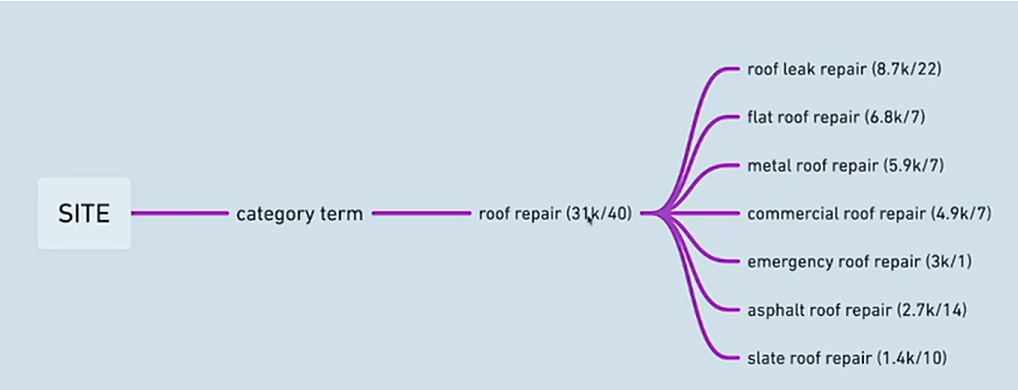
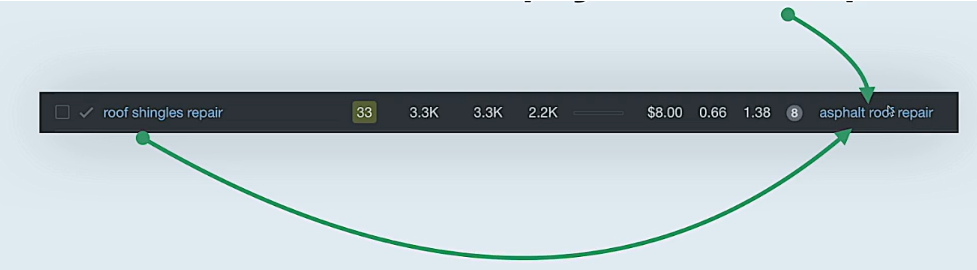
A keyword that is not identified as “parent keyword” doesn’t require its own page. Only parent terms need their own pages in a sitemap. In below, I can rank for roof shingles repair, with my asphalt roof repair page.
If it’s clear that a term needs to be targeted with an article instead of a service page, add that to a separate list (on sitemap, add content terms to the left side to differentiate them). Creating a robust content/article side of the sitemap is how you’ll sell the client on a content marketing retainer.